


Teknik Makaleler
What is Pressure?
5 yıl önce
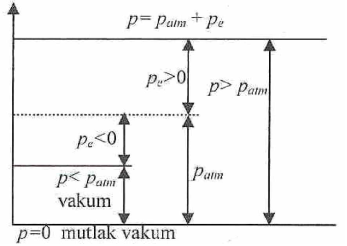
The force falling on a surface area of 1 m² is called pressure and its unit is Pa (N/m²). Due to the thickness of the atmosphere layer, that is, due to the weight of the air surrounding the world, the pressure at sea level is about 1 Bar (101,325 Kpa to be exact).
This pressure is a pressure loaded on every substance on earth, and substances counteract it with their internal pressure and keep it in balance without being crushed. This is why a can or plastic bottle is crushed when air is drawn from it. For this reason, when we apply an external pressure to a substance or fluid, for example, when we apply a pressure of 1 bar, the absolute pressure applied to that substance is two bars.
This pressure, which is applied by us apart from the atmospheric pressure normally loaded on every substance, is called the effective pressure, the sum of these two pressures is called the absolute pressure. Figure (2.1) It is the effective pressure at the pressure we measure in manometers. With the fan, we give an effective pressure to the air that is normally at atmospheric pressure. In other words, we give extra pressure to the air, which is already under 1 Bar pressure.
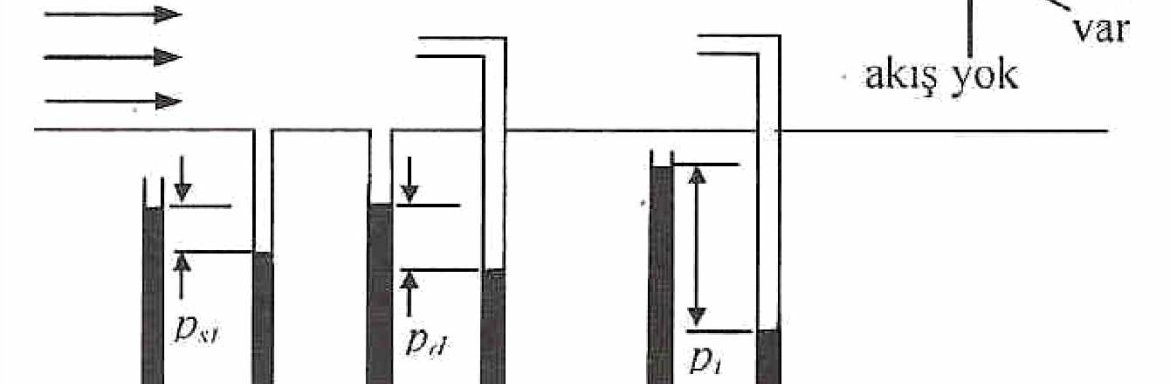
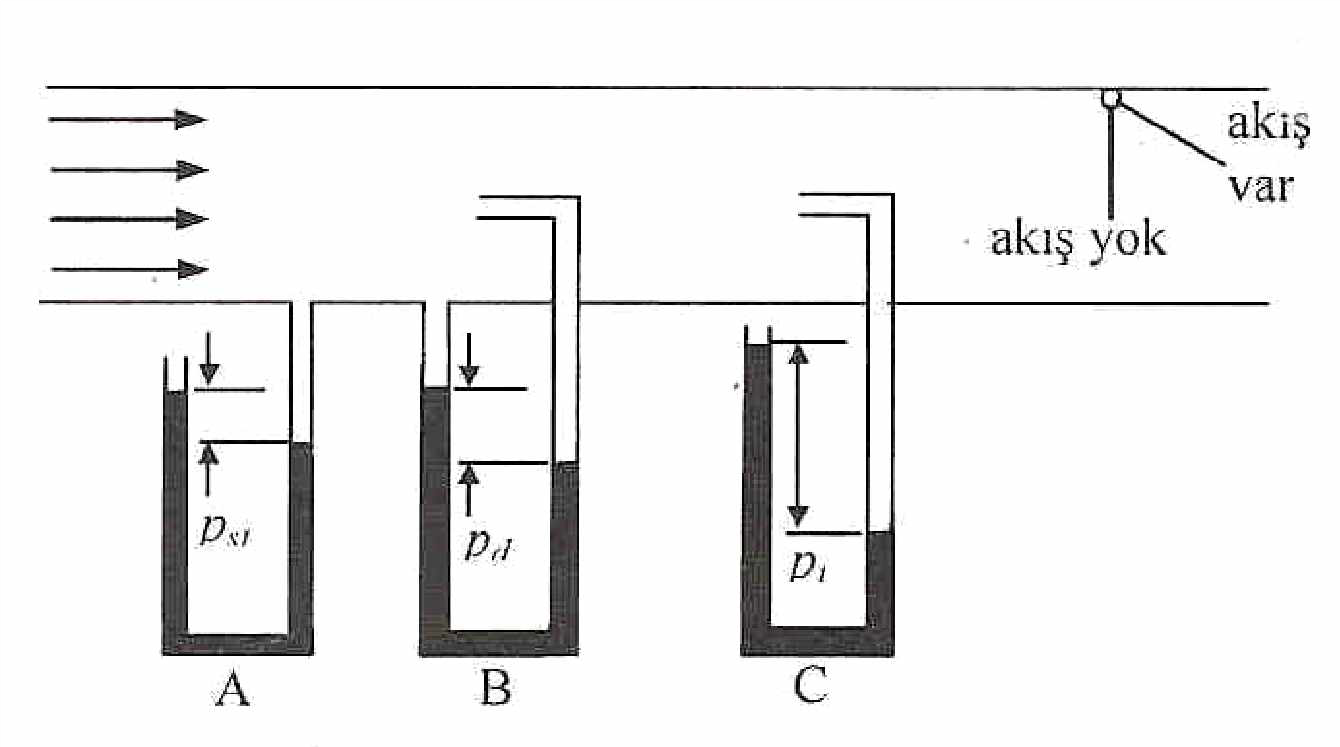
If a fluid is standing still in a control volume or is flowing at a constant speed, the pressure it applies to the walls of the volume it is in is called static pressure. (Pst) This static pressure has an effect in all directions.
If a fluid is flowing inside the control volume it is in, it will exert a pressure due to its velocity in the direction it flows. If the plate placed in a movable channel moves towards the flow direction, it is due to the pressure in that direction and is called velocity pressure or dynamic pressure. (Pd) Static and dynamic pressures are brought above or below the atmospheric pressure (vacuum) by an external effect. Therefore, both pressures are the effective pressure.
The sum of both pressures is called the total pressure. (Pt) Since static pressure acts in all directions and dynamic pressure is in the flow direction, the sum of the static pressure and the pressure in the flow direction gives the total pressure. Necessary explanations are given in Figure (2.2) below.
© 2026 Besis İklimlendirme - bugra.work Tarafından Hazırlanmıştır.